 Français
 Español
 English
Recipe for our green olives in brine | La Casa Del Limon Caviar blog – great culinary recipes
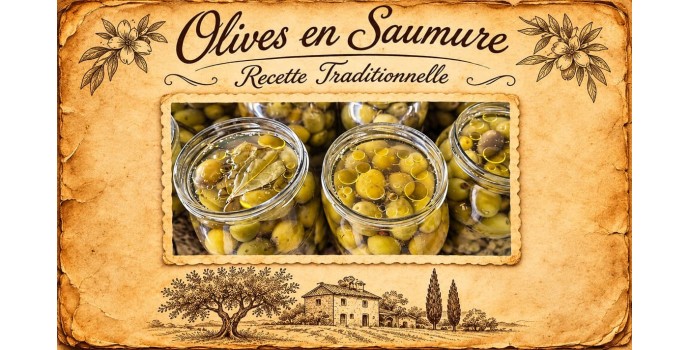
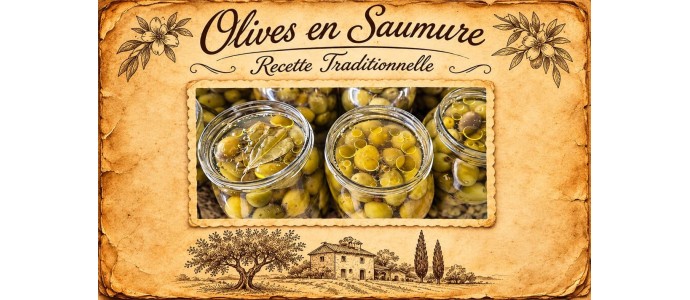
How do you make homemade olives? Here is our authentic, old-fashioned recipe for jarred green olives that you can keep all year round. Some people have asked us for our traditional recipe for marinated olives; while our olives aren’t "marinated" in the strict sense, we will show you how to marinate them just before serving.
Our Grandmother’s Recipe for Green Olives in Brine
As we’ve mentioned before, our plantation is based on the principles of polyculture—an agricultural practice that involves growing several different plant species on the same farm, or even simultaneously on the same plot of land. In other words, we have various types of crops coexisting and interplanted on the same plot.
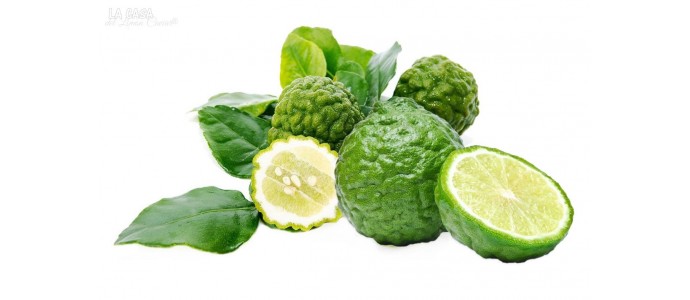
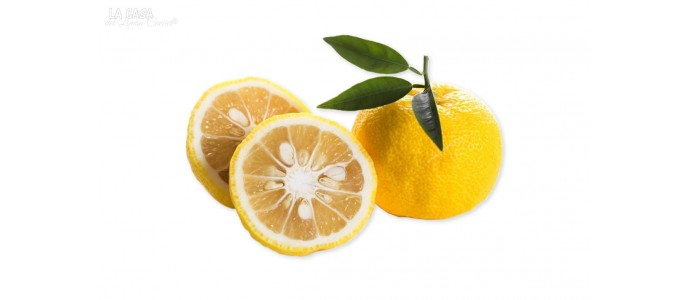
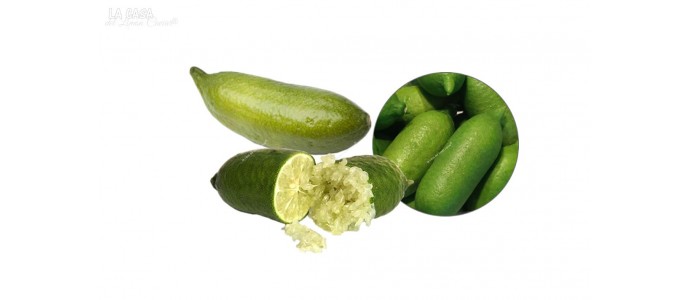
We grow finger limes (caviar limes), kumquats, kaffir limes (combava), yuzu, and Eureka lemons, as well as table grapes, avocados, mangoes, peaches, nectarines, apricots, plums, and pomegranates. This is in addition to numerous flower beds and, of course, a 60m² pond. All of this creates a stable ecosystem, which means we never need to use chemical treatments, as we have no issues with diseases or pests.
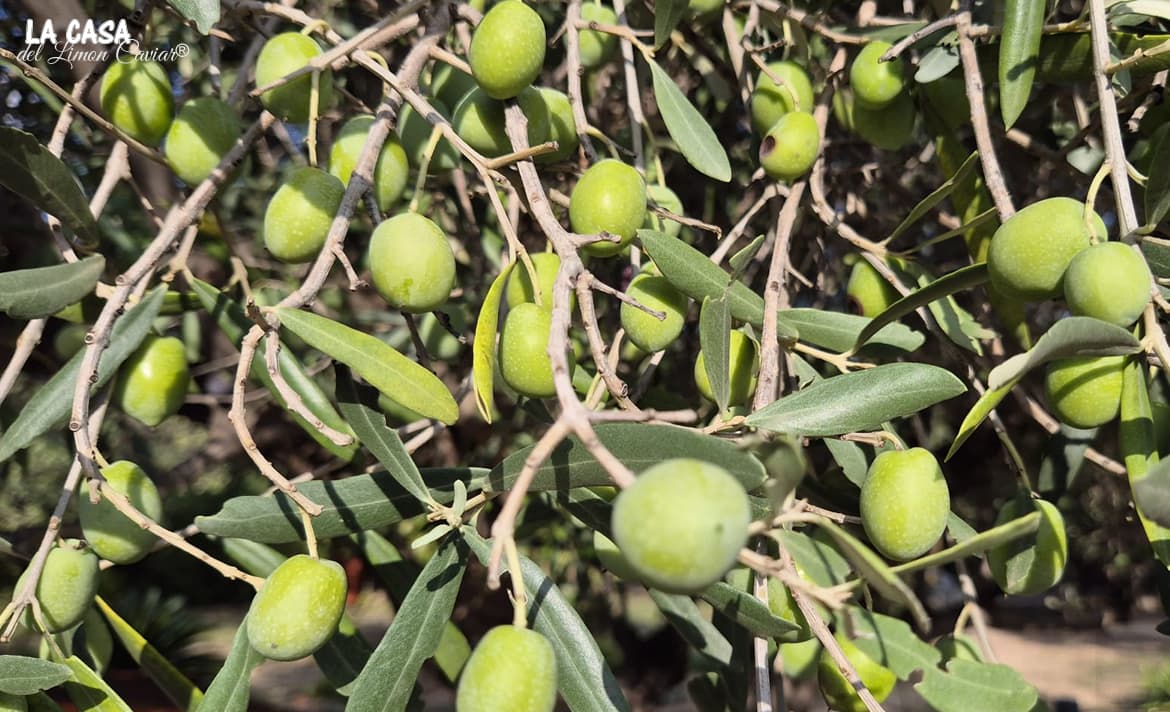
This allows us to produce high-quality fruit, and every year we prepare jars of green olives in brine. Making your own olives at home is a real pleasure!
How do you make homemade olives? Here is our authentic, grandmother-style recipe for jarred green olives that you can keep all year round. People often ask us for our grandmother’s recipe for marinated olives—well, here it is!
Strictly speaking, our olives are not pre-marinated, but we will provide you with instructions on how to marinate them before serving.
The method for preparing green olives—the very best recipe—is the same one we have used for years, as is the case with many traditional culinary recipes.
Please note that the entire process, from start to finish—including preserving the green olives in glass jars—takes several days.
There are 4 stages:
1- How to prepare them?
2- How can you quickly remove the bitterness from green olives? What methods can be used?
3- How do you prepare them in brine, and what are the correct proportions?
4- How do you preserve green olives in glass jars?
Let’s begin:
1- How to prepare your green olives?
- Harvest your green olives while they are very fresh; select the best ones and discard any that are damaged.
- Clean and wash them under running water.
- Place them in a clean bucket, basin, or other non-reactive container filled with clear water, and add 1 tablespoon of vinegar per liter of water.
- After 24 hours, remove any olives that have risen to the surface, as well as any that have turned black or show signs of decay.
- Wash them again, change the water, and repeat this process for 3 consecutive days.
2- How can you quickly remove the bitterness from green olives?
What methods can be used?
- As you know, olives are naturally bitter—to varying degrees, depending on the variety and the time of harvest.
- They must therefore be debittered, for which there are two methods: either a lye (sodium hydroxide) bath or soaking them in water for several weeks.
• Method 1: Lye bath (alkaline agent)
- This is the "Seville method": How does it work? It is a technique that has existed since antiquity—well-tested, though I will cover it in more detail in a future article. To get back to the point: how do you prepare a lye bath to debitter your olives? I personally use food-grade caustic soda (sodium hydroxide) in bead form, which you can find in various shops and supermarkets.
- What is the correct dosage of lye? This is the crucial part that requires your full attention: the ratio is 18g to 24g of lye per liter of soaking water. You must check the concentration of the specific product you purchase! For example, if I buy a product with a 60% lye concentration, I know that for one liter of soaking water, I need 24g of lye. Therefore, I must measure out 40g of that product (24 ÷ 0.60 = 40) to obtain the required 24g of lye. In short, I carefully measure the number of liters of water needed to ensure my olives are completely submerged. And I add 40g of "product X" per liter of water.
- There you have it—this is what is known as a lye solution (caustic soda solution). Once added, stir well to ensure the lye dissolves completely; this is important!
- CAUTION: Lye is potentially corrosive, so you must use: rubber gloves, protective goggles, a mask if necessary, long sleeves that provide coverage, and wooden or plastic utensils.
- The soaking process lasts for an average of 10 hours.
- Next, rinse the green olives thoroughly, then soak them again in clean water for 3 to 4 days, changing the water twice a day, until the water becomes nearly clear.
- Taste an olive and evaluate its flavor to your liking. If they are still too bitter, continue the water baths.
• Method 2: Slow debittering via water baths
- This is the standard method: Submerge the olives in clear water, change the water regularly—at least once a day—and taste them periodically until they reach your preferred flavor.
- This process can take several weeks.
3- How do you prepare them in brine, and what are the proportions?
Making brine is extremely simple: it is just salt dissolved in clear water. You need a 10% brine solution, which means 100g of salt per liter of water. Place your olives into glass jars—a step that requires a few precautions: be sure to thoroughly sterilize your jars and lids. If you are reusing jars, check them carefully, as the silicone seal may have degraded.
• How do you prepare brine for your green olives?
- Bring water to a boil (the amount will depend on the number of jars), adding 100g of salt per liter. After 10 to 15 minutes, add your aromatics—such as thyme, bay leaves, oregano, savory, whole black peppercorns, or chili peppers. (Note: Do not use fresh herbs; always use dried or freeze-dried herbs, as these are free from bacteria and parasites.) Bring the mixture to a boil again for another 10 minutes. And there you have it—it’s ready!
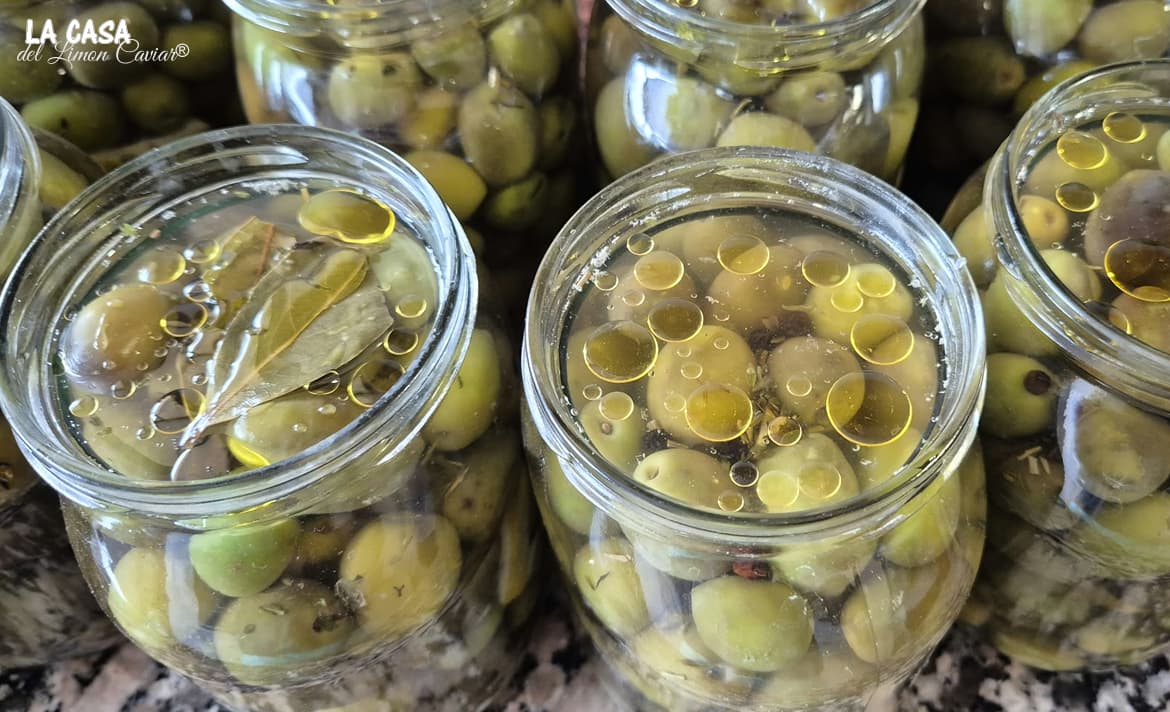
- Place the olives into jars, along with 1–2 cloves of fresh garlic and 2 slices of untreated (organic/unwaxed) lemon. Pack them down slightly, then pour in the brine—don't forget to include the aromatics left at the bottom of the saucepan.
- The brine should completely submerge the olives, covering them by at least one centimeter. We also add a drizzle of olive oil on top; the antimicrobial properties of extra virgin olive oil are well-known.
- Seal the jars tightly and store them in a cool place (we keep ours in a wine cellar at 14°C).
4- How to preserve green olives in glass jars?
After 3 to 4 weeks, check the acidity of the brine. If necessary, adjust it to ensure the pH is below 4.5 by adding citric acid, which will help with preservation. You can use an electronic pH meter or pH test strips to check this.

Comments
No comment at this time!
Leave your comment, Required fields are marked with *